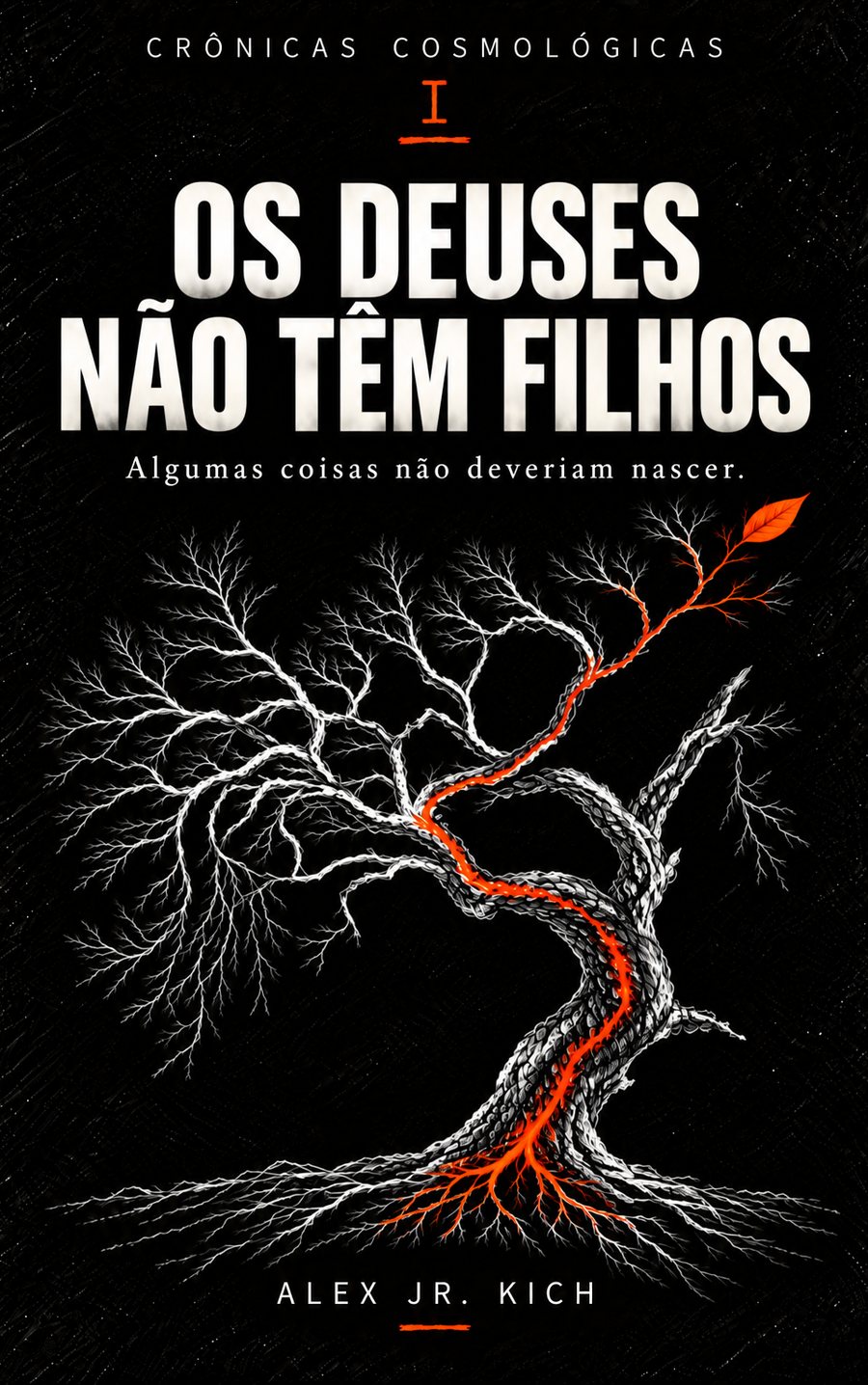
THE GODS HAVE NO CHILDREN
Alex Jr. Kich
Creating a life gives no one the right to own it.
- Portuguese edition
- Amazon
There is a point at which the question of origin stops being scientific and becomes personal.
In The Gods Have No Children, Enki, Ninhursag and a child who should not have been born clash over creation, inheritance and obedience. Birth is not merely someone’s arrival in the world. It threatens an order built on the idea that to create is also to determine.
Caio stands at the center of this rupture. He receives an inheritance he did not ask for and discovers that carrying something from those who came before does not mean repeating their desires. Around him, forces and characters try to understand whether the child is a mistake, a continuation, a threat or a possibility.
The story moves through a territory where ancient names live alongside deeply human decisions. The novel refuses to treat its “gods” as omnipotent figures. They err, calculate, protect, fear, and try to control the consequences of what they have done. The question stops being “who made us?” and becomes a more dangerous one: “what do we owe those who made us?”
When the child’s existence breaks a rule that seemed absolute, each character must choose between preserving the system and admitting that life can produce something no architecture foresaw.
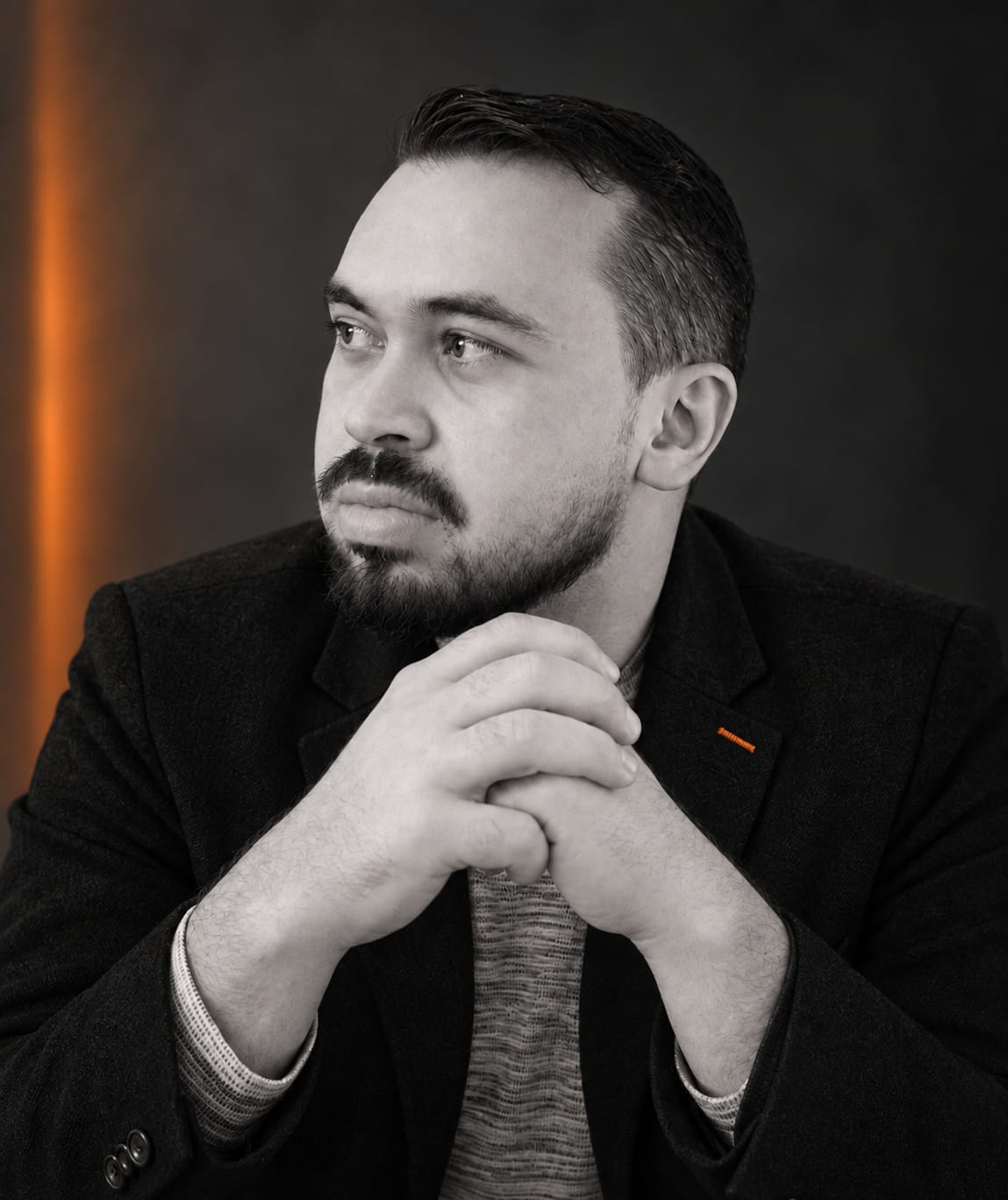
Alex Jr. Kich
Writer, artist and worldbuilder. Based in Rio Grande do Sul, Brazil, he draws, composes and writes stories at different scales.
Meet Alex Jr. Kich- Series
- Cosmological Chronicles
- Volume
- I
- Original title
- OS DEUSES NÃO TÊM FILHOS
- Author
- Alex Jr. Kich
- Status
- Available in Portuguese
The setting combines recognizable human spaces with a layer of origin and intervention that suggests a history older than anything humanity knows. The contrast is deliberate: questions of nearly mythological scale are experienced by people in physical, familiar, vulnerable places.
The narrative does not depend on a distant world. The strange shows up through inheritances, bodies, decisions, documents and presences that seem to carry a memory older than the characters’ own lives.
Caio
The heir who refuses to be an automatic continuation. His arc puts autonomy at the center of the book: receiving an origin, a legacy or a function does not mean consenting to it.
Enki
A figure tied to creation and intervention. He is not treated as an abstract deity but as an agent whose decisions have consequences. His relationship with what he helped produce is crossed by responsibility and limit.
Ninhursag
One of the symbolic centers of the volume. Her presence links birth, creation, and the body. The word “wait” finds in her one of the collection’s important seams.
The child who should not have been born
More than a biological enigma, the child represents the possibility of something new escaping the intention of its creators. Its existence puts the idea of a perfect design in crisis.
Elisa
A recurring counterpart who appears at another stage of her path in different books. Here her presence takes part in the discreet connections that unite independent stories.
The human conflict is that of inheritance. Children receive names, stories, debts, expectations, and fears from people who existed before them. The book carries this experience to a cosmic scale: even if our species had creators, we could still say no.
The book turns on one idea: creation is not property.
Parents create children, societies create institutions, scientists create systems and civilizations may create other forms of life. In every case there is a similar temptation: to confuse origin with permanent authority.
The central question is: if we were made by someone, does that oblige us to fulfill the intention of whoever made us?
The Gods Have No Children answers through the characters’ choices, not through a thesis. Caio can inherit without obeying. The child can exist without justifying its existence to the project that produced it. And the creators must face the possibility that the truest act of creation is to allow what was born to stop belonging to them.
The title contains the philosophical provocation of the novel. A god who demands descendants as extensions of himself has no children; he has copies. Filiation only begins when there is separation.
Birth, tree and living branch, inheritance, mark, body, lineage, refusal and the presence of Ninhursag.
Science fiction with mythological resonance, sustained by human relationships, choices and concrete consequences.